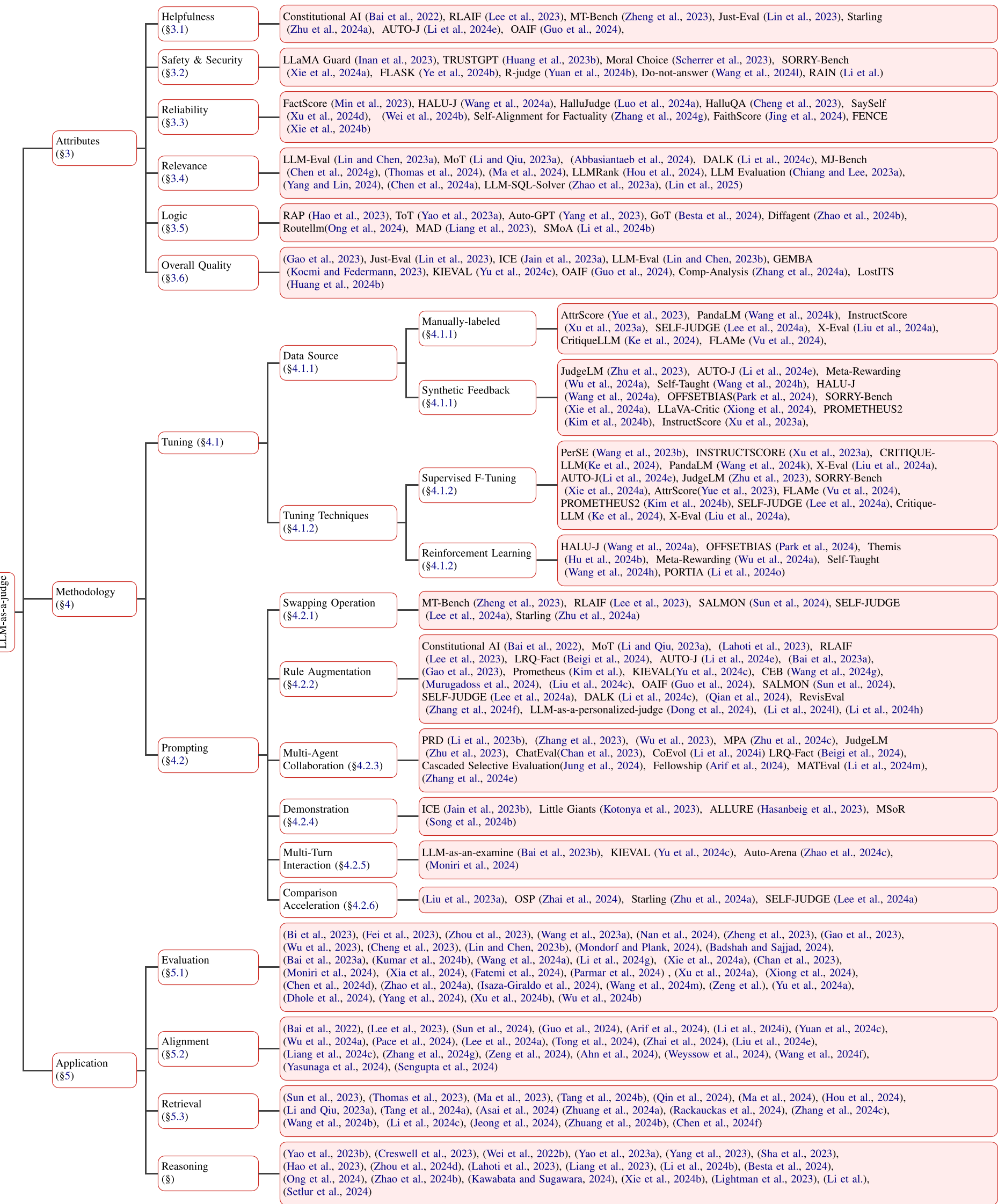
From Generation to Judgment: The Rise of LLM-as-a-Judge
From generation to judgment: Opportunities and challenges of llm-as-a-judge
This paper provides a comprehensive survey of "LLM-as-a-judge," a paradigm where Large Language Models are used to evaluate AI outputs. It introduces a systematic taxonomy across three dimensions—attributes, methodology, and benchmarks—while highlighting the transition from simple generative tasks to complex, autonomous judgment agents.
TL;DR
As Large Language Models (LLMs) push the boundaries of open-ended creativity and complex reasoning, our old yardsticks—like BLEU and ROUGE—have become obsolete. This paper explores the LLM-as-a-judge paradigm: utilizing powerful models like GPT-4 or specialized evaluators to score, rank, and select the best AI outputs. It is a critical shift from static evaluation to dynamic, human-like reasoning.
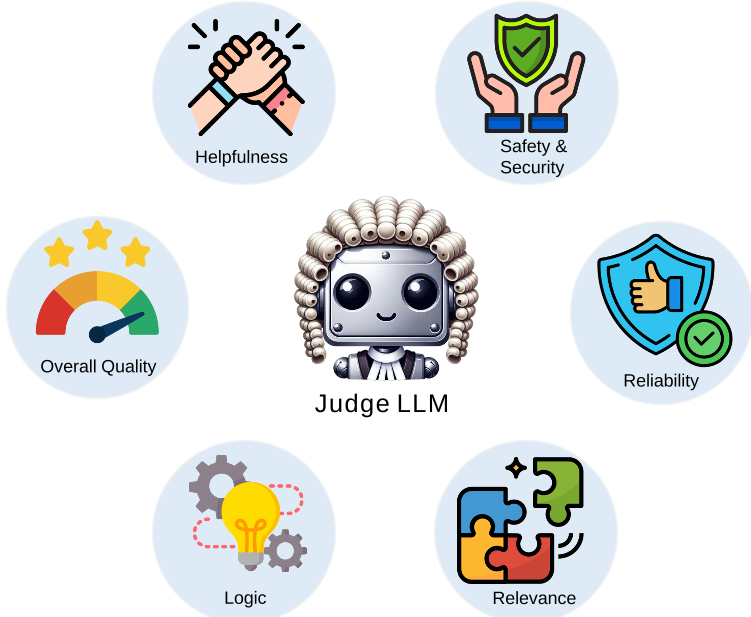
Background Activity: This work serves as a comprehensive "state-of-the-union" for AI evaluation, moving beyond simple "correct/incorrect" checks to multi-dimensional assessments of helpfulness, safety, and logic.
The Motivation: Why Traditional Metrics Failed
For years, NLP relied on "matching-based" metrics. If a model's summary contained the same words as a reference, it was "good." However, this fails to account for:
- Paraphrasing: A model can be factually correct but linguistically different.
- Helpfulness: Overlap doesn't measure how useful an answer actually is.
- Safety: Traditional metrics cannot "see" toxic or deceptive behavior disguised in polite language.
The "LLM-as-a-judge" approach solves this by treating evaluation as a high-level comprehension task.
Methodology: How Models Judge
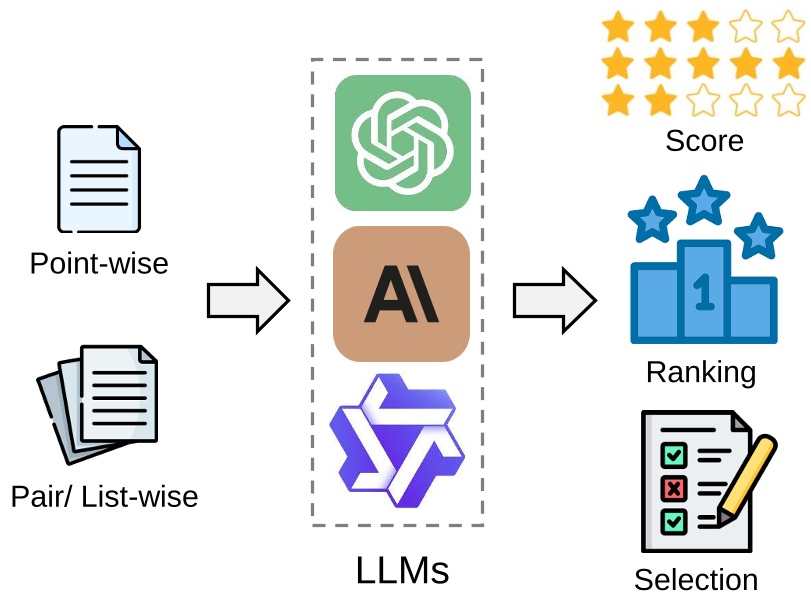
The paper breaks down the judgment process into a clear input/output framework:
- Format: Judges can look at a single response (Point-wise), compare two (Pair-wise), or rank a whole list (List-wise).
- Logic: They don't just output a number; they often provide a Rationale (Chain-of-Thought), explaining why a certain result was chosen.
Advanced Judging Strategies
- Swapping Operation: To combat "position bias" (where models prefer the first option), the judge is invoked twice with the candidates' orders swapped.
- Multi-agent Collaboration: Multiple LLMs "debate" the quality of a response, reaching a consensus that is more robust than a single model's opinion.
- Self-Judging: Models like "Self-Reward" allow an AI to critique its own drafts, creating a flywheel of continuous self-improvement.
Beyond Evaluation: The AI Lifecycle
One of the paper's most insightful claims is that judgment isn't just for the "end" of a project. It is now used for:
- Alignment: Generating massive synthetic datasets to teach smaller models how to follow instructions (e.g., RLAIF).
- Reasoning: Acting as a "Verifier" in search trees to decide which reasoning path a model should continue pursuing.
- Retrieval (RAG): Filtering out irrelevant documents before the model even starts writing.
The Catch: Bias and Vulnerability
Despite their power, LLM judges are not perfect. They exhibit:
- Verbosity Bias: A tendency to give higher scores to longer, "smart-sounding" answers, even if they contain errors.
- Self-Preference Bias: Models often prefer answers that match their own training style.
- Vulnerability: They can be "tricked" by prompt injection—specific phrases that force a judge to award a high score.
Critical Analysis & Conclusion
The shift toward LLM-as-a-judge is inevitable. As we move toward Large Reasoning Models (like o1), judgment will scale at inference time. The next frontier is Scaling Judgment Compute: allowing the judge to "think" longer (CoT) to ensure a fairer verdict.
Takeaway: The "Judgment" capability is effectively the "Supervisor" of the next generation of AI agents. If we cannot build a perfect judge, we cannot build a perfect agent.