
GAN-RF: Elevating AI-Generated Tweet Detection to 99.6% Accuracy
Using generative adversarial network to improve the accuracy of detecting AI-generated tweets
2024-11-26
Summary
Problem
Method
Results
Takeaways
Abstract
The paper introduces a hybrid framework for detecting AI-generated tweets by combining Generative Adversarial Networks (GANs) for deep feature extraction and a weighted Random Forest (RF) for classification. Achieving a state-of-the-art average accuracy of 99.60%, it outperforms existing baselines like IDEATE and BERT-based detectors.
## TL;DR
As LLMs like GPT-4 and Claude become ubiquitous, the line between human and machine-generated content on platforms like X (Twitter) has blurred. This paper presents a novel hybrid architecture that uses a **Generative Adversarial Network (GAN)** to extract deep textual features and a **Weighted Random Forest (RFW)** to classify them. The result? A staggering **99.60% accuracy**, setting a new benchmark for the field.
## Problem & Motivation: The Turing Test in 280 Characters
Traditional text classifiers often rely on simple N-gram counts or shallow embeddings, which are easily fooled by the sophisticated prose of modern AI. Tweets present a unique challenge: they are short, filled with noise (hashtags, URLs), and lack the deep structural cues found in long-form essays.
The author noticed that while AI can mimic human style, it leaves behind a "digital thumbprint" in the way words co-occur and correlate. The core intuition here is that a **GAN—a model designed to generate or critique data—is uniquely suited to identify these subtle synthetic patterns** better than a static transformer-based classifier.
## Methodology: The GAN-Discriminator as a Feature Powerhouse
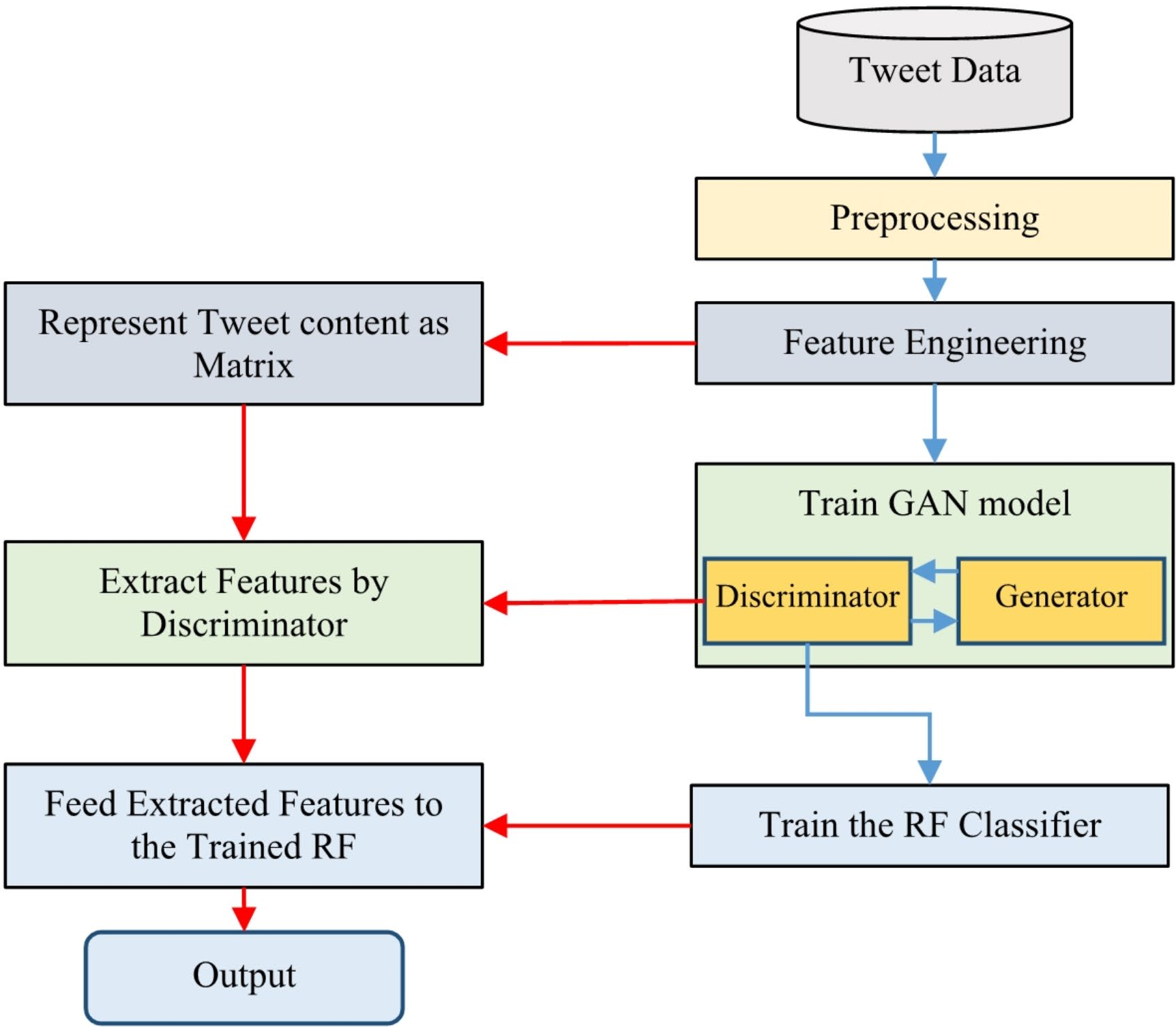
The workflow is divided into four sophisticated stages:
### 1. Structured Text Representation
Instead of simple word embeddings, the paper converts preprocessed tweets into a **Square Co-occurrence Matrix**. This matrix is a tripartite representation:
- **Upper Triangle**: Word correlations (Pearson coefficient).
- **Lower Triangle**: Raw co-occurrence counts.
- **Main Diagonal**: Word weights (TF-IDF).
### 2. GAN-Based Feature Extraction
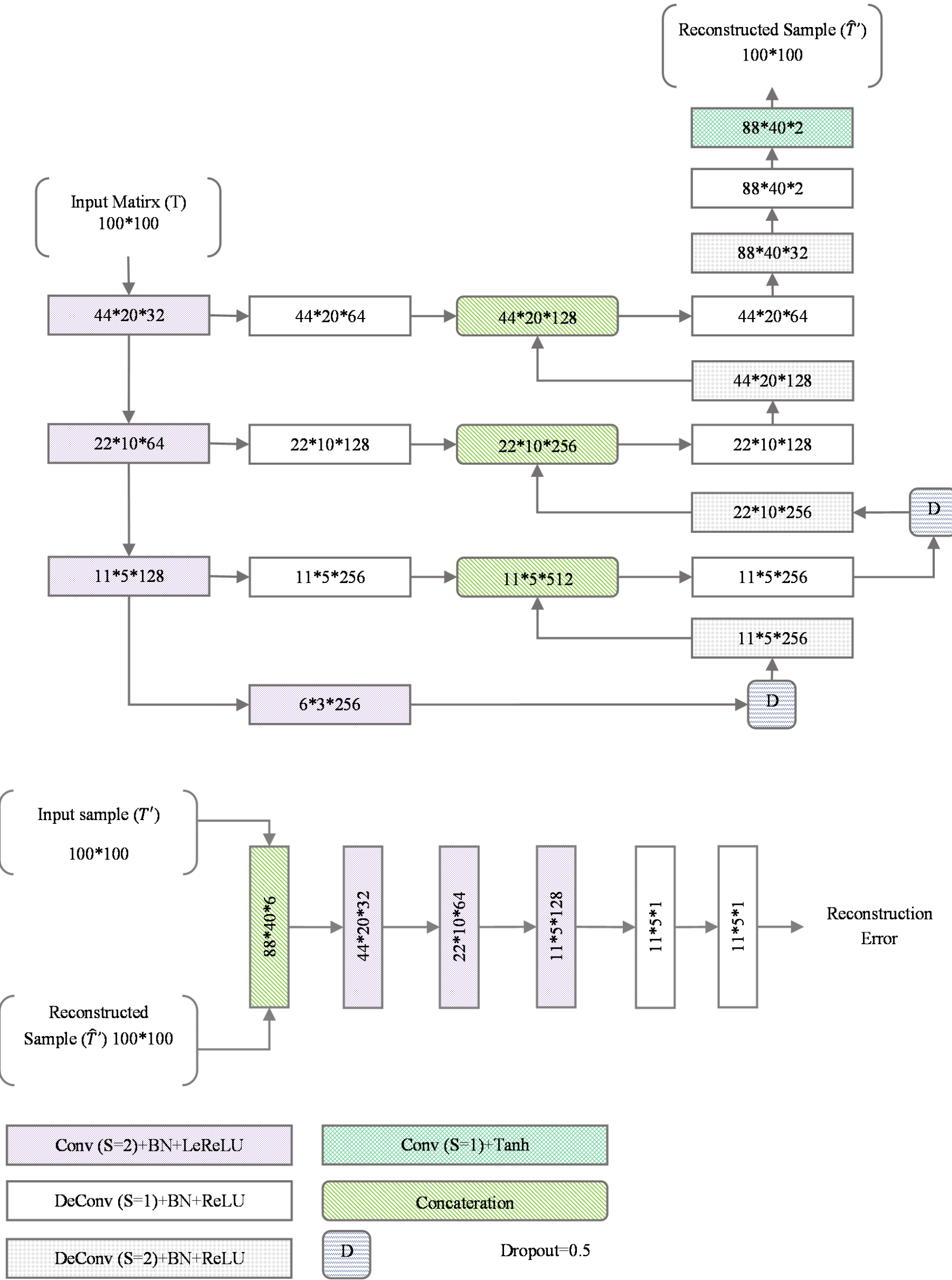
The paper utilizes a GAN based on the **UNET architecture**. While the generator attempts to reconstruct "noise-free" patterns, the **Discriminator** is the real star. Through the training process (using WGAN-GP + L1 loss), the discriminator learns a highly abstract and informative latent space that separates human "realness" from AI "syntheticness."
### 3. Weighted Random Forest (RFW)
Unlike a standard Random Forest where every tree has an equal vote, the author introduces a **Weighting Mechanism**. Each of the 20 CART decision trees is assigned a weight [0, 7] based on its individual performance. This ensures that the most "knowledgeable" trees have the loudest voice in the final verdict.
## Experiments & Results: Crushing the Baselines
The model was tested on a massive dataset of **1.7 million tweets**, including outputs from Gemini, GPT-4, LLaMA, and Claude.
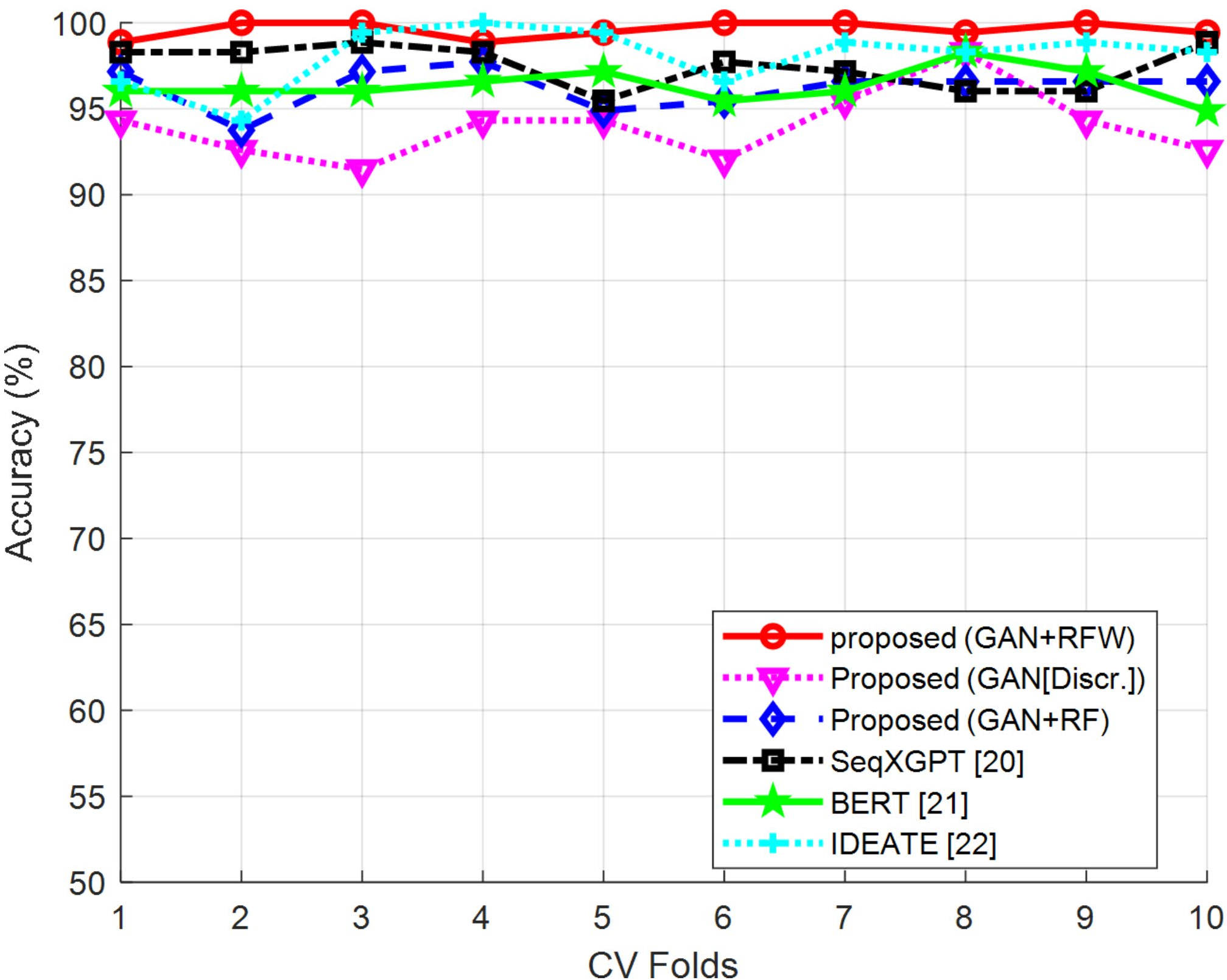
- **Performance**: The GAN+RFW model achieved **99.60% accuracy**.
- **Ablation Insight**: Using the GAN's discriminator alone for classification only yielded ~93.9% accuracy. Adding the Weighted Random Forest on top of GAN features provided the critical 5.6% boost.
- **Scalability**: Interestingly, accuracy increased with tweet length, suggesting that the model successfully harvests more "informational clues" as the context grows from 50 to 250 characters.
## Critical Analysis & Conclusion
### Takeaway
The genius of this work lies in **repurposing the GAN**. By ignoring the "Generator" and focusing on the "Discriminator" as a feature extractor, the author has created a model that doesn't just look for keywords—it looks for the *structural logic* of how AI thinks.
### Limitations
The primary bottleneck is **computational cost**. Training a GAN followed by a 20-tree weighted forest is intensive. Moreover, as LLMs evolve to be "more human than human," the decision boundaries found by this GAN may need constant retraining (Concept Drift).
### Future Outlook
This framework could easily be extended to other modalities—imagine a GAN-RF pipeline for detecting AI-generated images or deepfake audio. In the ongoing arms race between AI creators and detectors, this is a heavy-duty weapon for the defenders.