
Fighting Fire with Fire: Leveraging GANs to Detect the Footprints of AI-Generated Tweets
Using generative adversarial network to improve the accuracy of detecting AI-generated tweets
This paper introduces a hybrid framework combining Generative Adversarial Networks (GAN) and Weighted Random Forests (RFW) to detect AI-generated tweets. By repurposing a GAN's discriminator as a high-dimensional feature extractor, the method achieves a state-of-the-art average accuracy of 99.60% across multiple LLM sources including GPT-4 and LLaMA.
TL;DR
As Large Language Models (LLMs) like GPT-4 and LLaMA become more sophisticated, the line between human and machine-authored content is blurring. This paper presents a powerhouse hybrid model that uses a Generative Adversarial Network (GAN) not to create text, but to deconstruct it. By combining GAN-based feature extraction with a Weighted Random Forest (RFW), the author achieved a staggering 99.60% accuracy in identifying AI tweets, outperforming existing SOTA models like BERT and IDEATE.
The Core Challenge: The Short-Form Blind Spot
Detecting AI-generated text is notoriously difficult when the context window is small. Tweets, limited to 280 characters, often lack the long-range semantic inconsistencies that give away LLMs. Traditional detectors often rely on "perplexity" or simple statistical distributions, which are easily bypassed by modern models like Gemini or Claude. The author recognized that to catch a generator, you need to understand the internal logic of generation—leading to the "Fighting Fire with Fire" intuition.
Methodology: The GAN-RFW Pipeline
The architecture is a sophisticated four-stage pipeline:
- Preprocessing & Matrix Representation: Instead of simple embeddings, the model converts tweets into a 3-component square matrix. This matrix encodes:
- Upper Triangular: Pearson correlations between words.
- Lower Triangular: Raw co-occurrence counts.
- Diagonal: TF-IDF weights (word importance).
- GAN-Based Feature Extraction: The paper utilizes a UNet-based GAN. Here is the "twist": the generator’s reconstructed output is ignored. Instead, the discriminator—which has learned the deep, abstract boundaries between "real" and "fake"—is transformed into a feature extractor.
- Weighted Random Forest (RFW): Most detectors treat all decision trees equally. This model assigns weights (0-7) to each of the 20 trees in the forest, ensuring that the most "expert" trees have a louder voice in the final verdict.
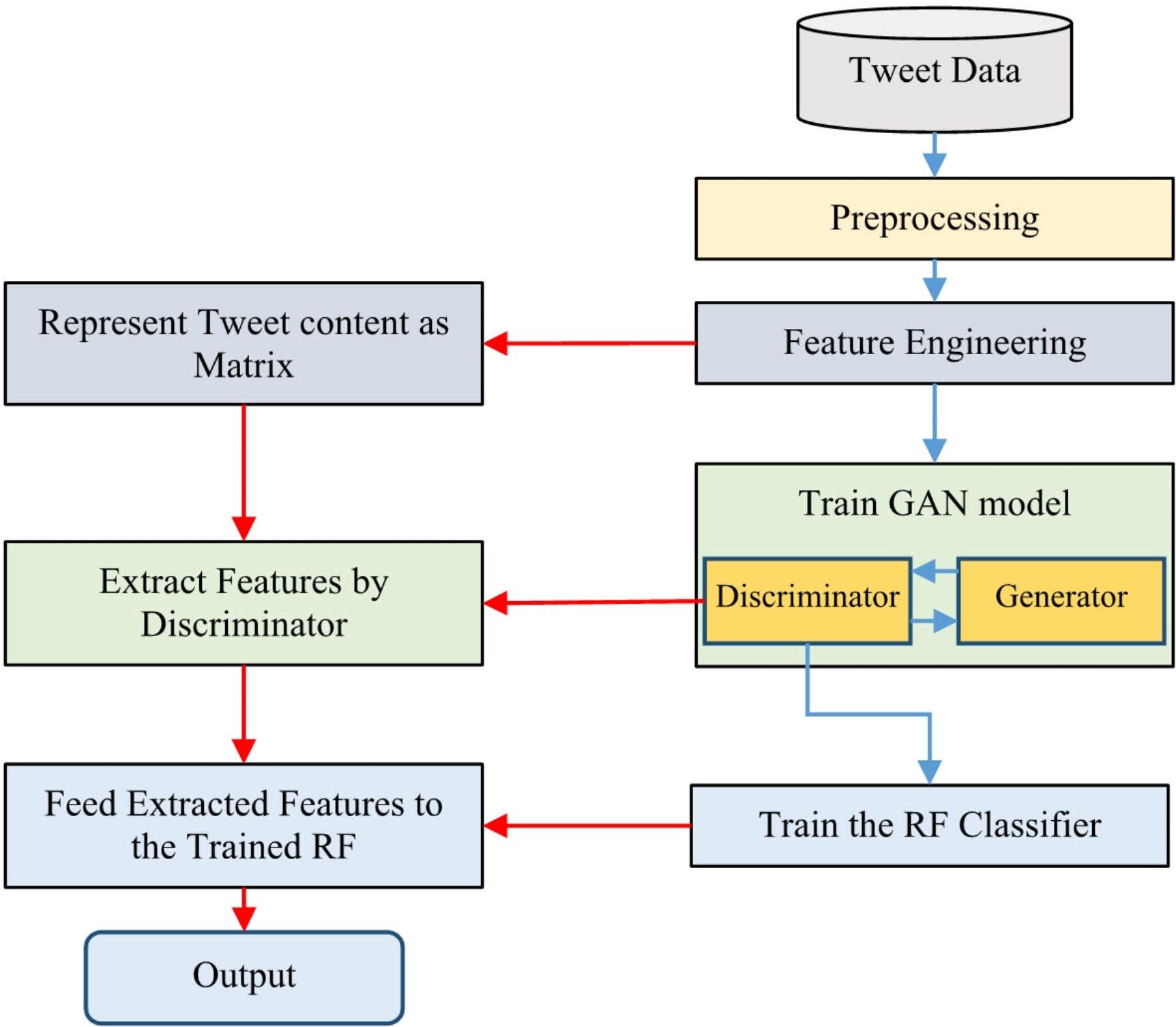 Fig 1: The holistic workflow from raw tweets to Matrix Representation and finally to the RFW classifier.
Why the Discriminator?
In a standard GAN, the discriminator must become exceptionally good at spotting minute artifacts to force the generator to improve. By tapping into the last convolution layer of the discriminator's decoder, the author extracts a weight vector (11 × 5 × 128) that serves as a highly specialized signature of the text’s origin.
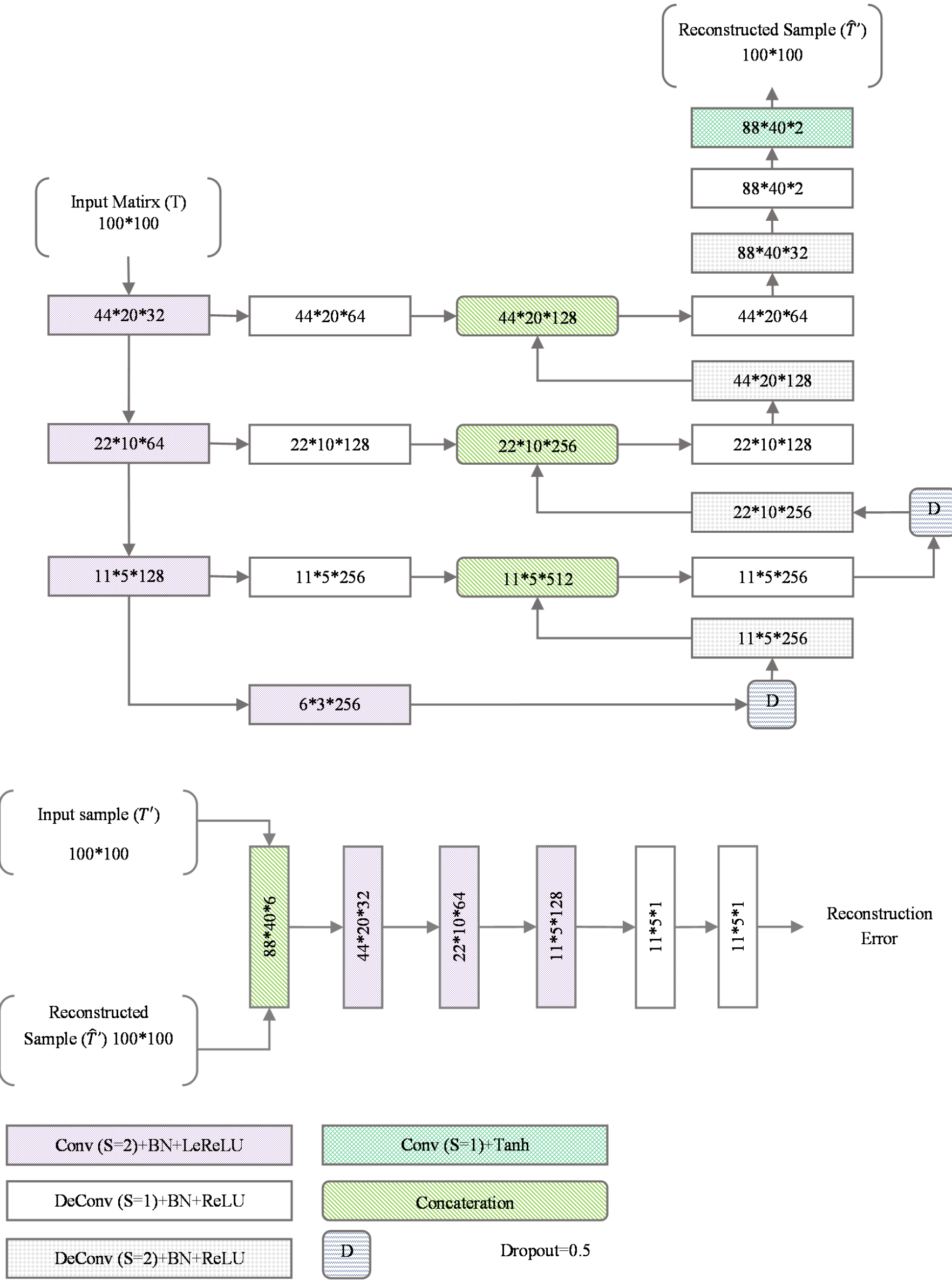 Fig 2: The Encoder-Decoder architecture of the Generator and Discriminator.
Experimental Breakthroughs
The model was tested against 1.7 million tweets, covering a massive spectrum from politics to tech.
- Performance: Achieving 99.60% accuracy, it sits atop the leaderboard, surpassing IDEATE (98.06%) and BERT-based (96.36%) models.
- Reliability: The 10-fold cross-validation showed extremely narrow variance, meaning the model is highly stable across different subsets of data.
- Length Dynamics: A fascinating find in the paper is the "Information Density" effect—accuracy increases as tweet length grows from 50 to 250 characters, as longer texts provide more statistical "surface area" for the GAN to analyze.
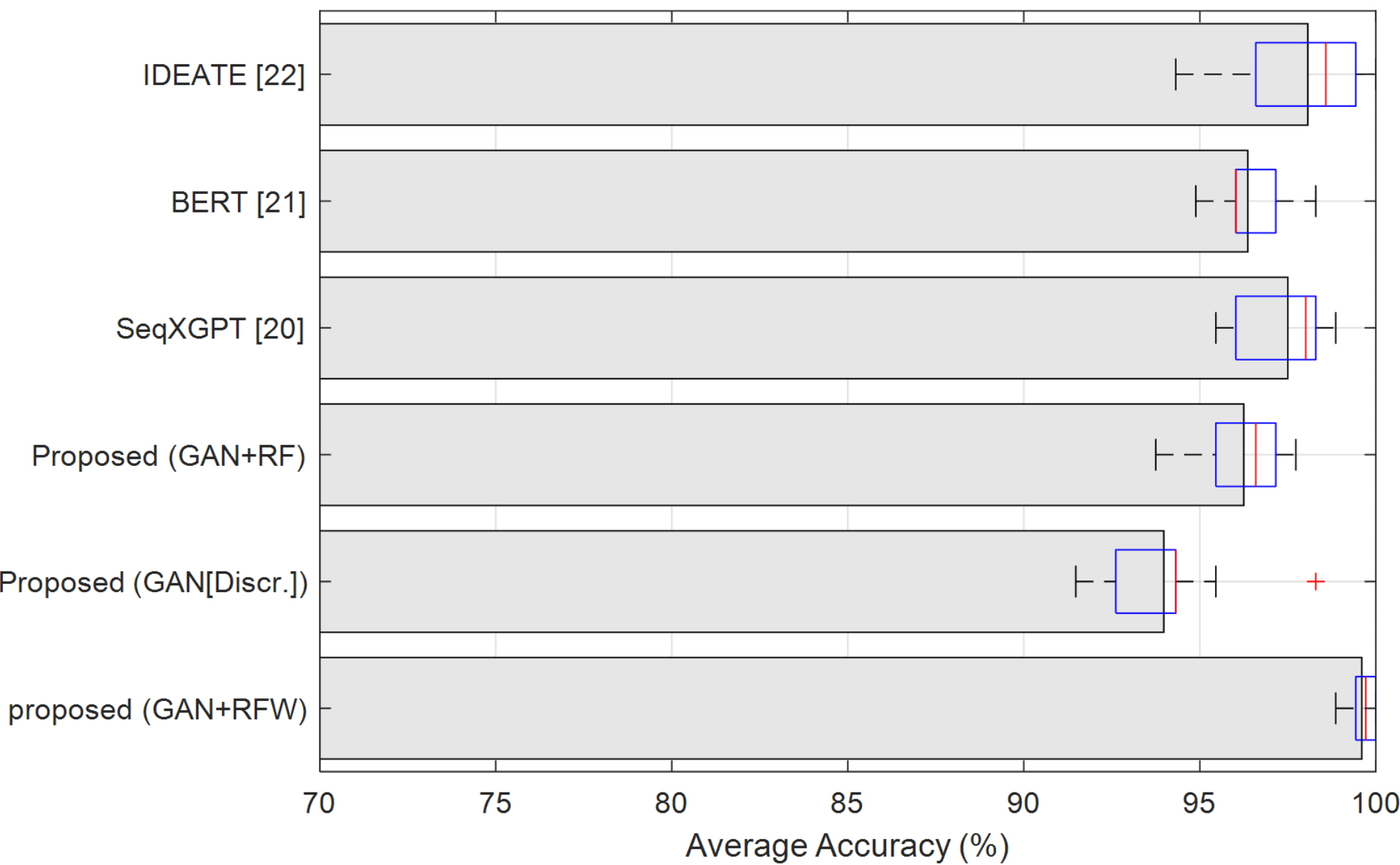 Fig 3: Average accuracy comparison showing the proposed method’s superiority over recent SOTA baselines.
Critical Insight & Limitations
The Takeaway: This research proves that GANs are not just for creation; their internal discriminative surfaces are actually state-of-the-art "fingerprint scanners" for AI text.
The Catch:
- Computational Cost: Training GANs and optimizing ensemble weights is resource-intensive, making real-time deployment a challenge for high-volume firehoses like Twitter's main feed.
- Arms Race: As LLMs evolve to be "GAN-aware" or utilize different sampling strategies, the co-occurrence signatures might shift, requiring continuous re-training of the feature extractor.
Future Outlook
The next frontier is Multimodal Detection. Could this GAN-discriminator approach be applied to "Deep-Tweet" analysis where images and text are generated together? The author suggests that optimizing the GAN architecture for efficiency is the primary hurdle before this can be integrated into standard content moderation APIs.
Paper Title: Using generative adversarial network to improve the accuracy of detecting AI-generated tweets Source: Springer Nature / Content provided via arXiv