
Ethical Retail as Experience: How Servicescapes Manifest Moral Ideology
Experiencing ethical retail ideology in the servicescape
This paper explores the ideological underpinnings of ethical retail through an ethnographic study of three independent Finnish stores. It introduces a conceptual framework where "ethical retail ideology" is manifested in the servicescape to shape embodied consumption experiences, ultimately categorized into three themes: Aesthetics, Nostalgia, and Care.
TL;DR
Ethical consumption is often framed as a dry, rational trade-off. However, this ethnographic study reveals that for consumers, ethical shopping is a deeply embodied, sensory, and emotional experience. By analyzing three unique Finnish retail environments, the researchers demonstrate that "Ethical Retail Ideology" is successfully communicated not just through labels, but through Aesthetics, Nostalgia, and Care woven into the very fabric of the store.
Beyond the Price Tag: The Problem with Rational Ethics
Most marketing literature treats the ethical consumer as a "calculating machine"—someone who weighs carbon footprints and fair-trade certifications. But why do we feel "better" in a small organic boutique than in a giant supermarket aisle, even if both sell organic eggs?
The researchers argue that the Servicescape (the physical and social environment of a service) is an ideological vessel. Existing research has focused on "Brand Ideology" (like the flagship Nike or Apple stores), but few have looked at how social, ecological, and moral values are physically manifested to create a lived experience.
Methodology: Step Inside the Ethical Store
The authors spent nearly two years immersed in three distinct servicescapes in Finland:
- Kate’s Boutique: A bohemian, sensory-rich space filled with recycled handicrafts and vintage furniture.
- Eco Market: A plain, functional social enterprise emphasizing materialistic simplicity and frugality as a moral virtue.
- Tea Room: A historical Art Nouveau house that uses 19th-century architecture and local tradition to anchor its ethical narrative.
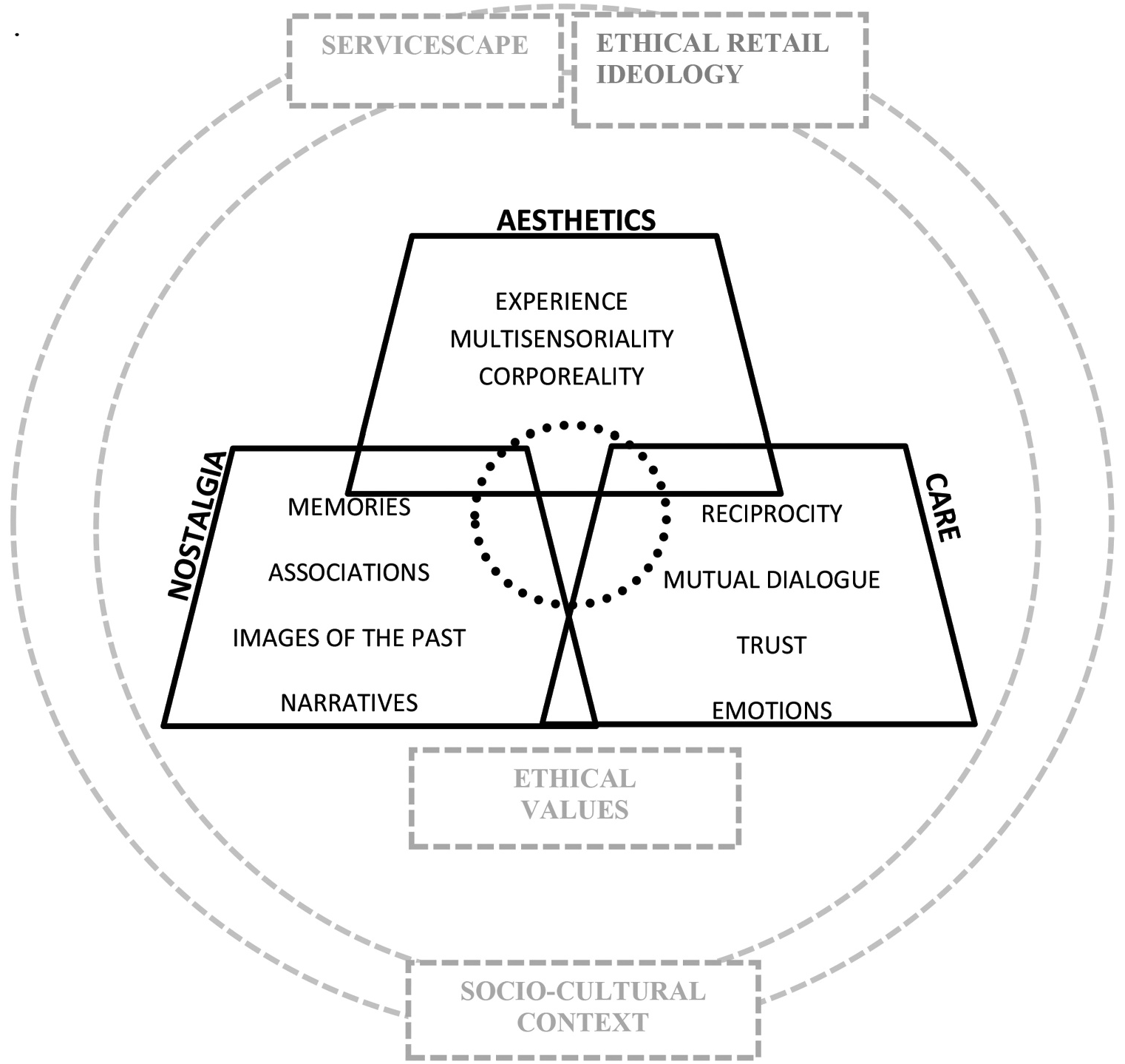 Figure: The conceptual framework showing how ethical ideology filters through cues to create thematic experiences.
The Three Pillars of Ethical Experience
1. The Aesthetic Dimension (The Multisensory Environment)
Ethics isn't just a thought; it's a feeling. In the studied stores, "Aesthetics" was used to signal morality. Simple, unpainted wood and the absence of plastic packaging in Eco Market were interpreted by consumers as signs of "honesty" and "frugality." In Kate’s Boutique, the mix of scents (fresh bread, chocolate, coffee) and the tactile nature of handcrafted goods allowed for an "immersion" that made ethical products feel more valuable and authentic.
2. The Temporal Dimension (Nostalgia as a Bridge)
A fascinating finding was the role of Nostalgia. Consumers often linked ethical consumption with a longing for a "purer" past—childhood summers or a grandmother’s countryside home.
- Authenticity via the Past: By using vintage furniture and local "village-style" layouts, retailers create a "historical stratification."
- Symbolic Bridge: Nostalgia acts as a bridge between the producer and consumer, countering the "commodity fetishism" of modern mass markets where the origin of goods is hidden.
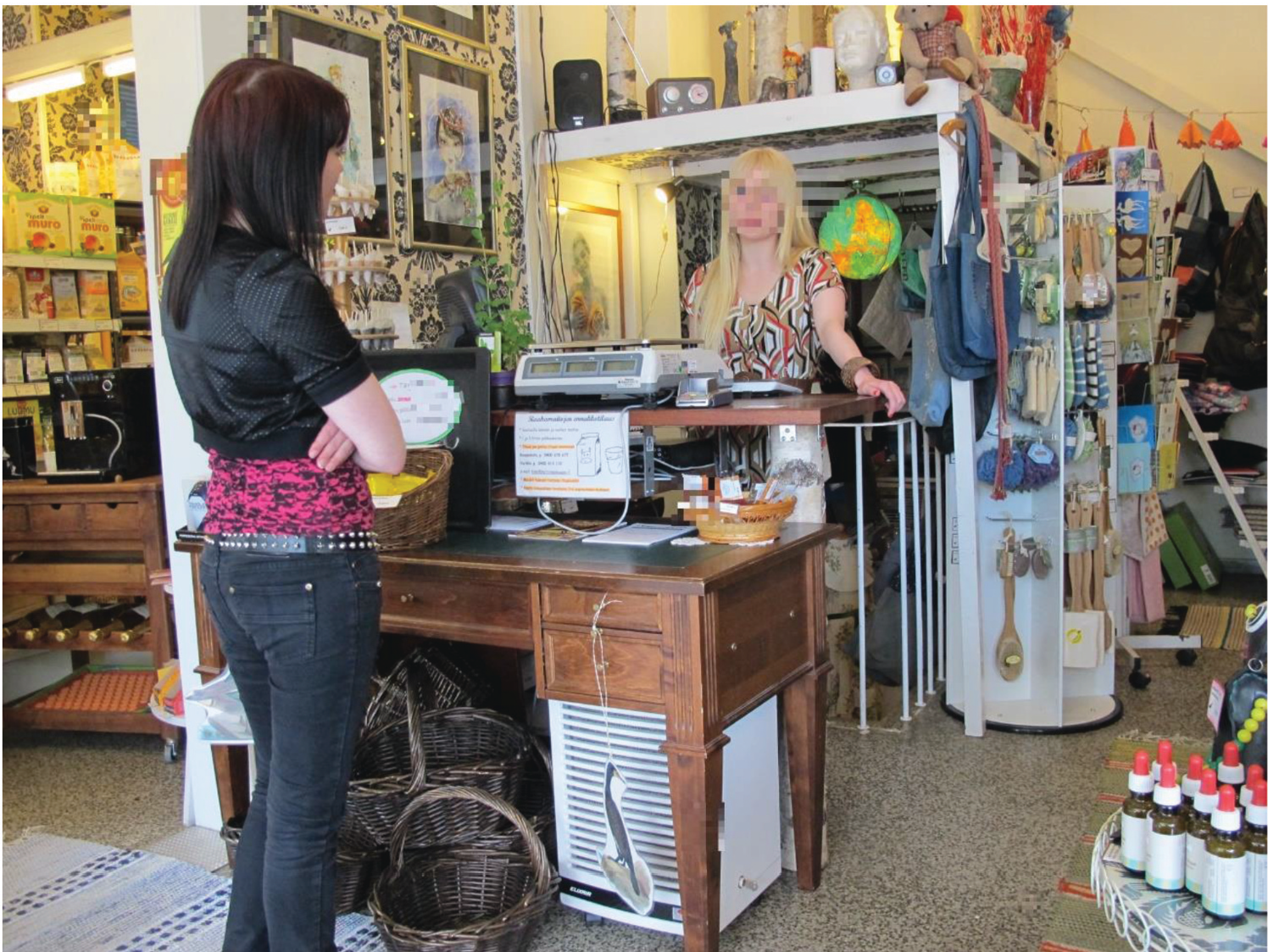 Figure: The interior of Kate's Boutique, showing the use of vintage aesthetics and multisensory layout.
3. The Social Dimension (The Reciprocity of Care)
"Care" is the heart of ethical ideology. It’s not just about caring for distant farmers but about the reciprocal relationship between the customer and the staff.
- Embodied Care: When staff are not in uniforms and engage in "slow service" or personal small talk about a product's origin, they embody the brand’s social values.
- Inclusiveness: Cues like gender-neutral toilets or the employment of marginalized groups (as seen in the Tea Room) serve as material evidence of a "Caring Democracy."
Critical Insights & Managerial Value
The research concludes that Ethical Ideology is an "anchoring point."
- For Researchers: This work challenges the "rational actor" model and proves that the body—through all senses—is the primary tool for constructing ethical meaning.
- For Retailers: To compete with giants like Amazon, local ethical retailers should lean into "Idiosyncratic Servicescapes." Use local history, encourage "browsing and fiddling," and ensure your staff's behavior mirrors your moral claims.
Limitations
The study is localized to a Nordic cultural context (Finland) and a specific social class that values these "bohemian" or "historical" cues. Whether these themes of Nostalgia and Aesthetics translate to high-speed, mass-market supermarkets (like a "green" section in a Walmart) remains an open question for future research.
Conclusion
This paper serves as a reminder that we don't just "buy" ethics; we "experience" them. By designing spaces that celebrate beauty, honor the past, and practice genuine care, retailers can turn a simple transaction into a powerful ideological statement.