
Engineering Transplant Tolerance: Pre-emptive ddDCreg Infusion Breaks the 13% Barrier
Donor-derived regulatory dendritic cell infusion and early immunosuppressive drug withdrawal in living-donor liver transplantation: a phase I/IIa trial
This phase I/IIa clinical trial evaluates the use of donor-derived regulatory dendritic cells (ddDCregs) to induce immunological tolerance in living-donor liver transplant recipients. The study demonstrates that pre-transplant ddDCreg infusion is safe and achieves a 37.5% operational tolerance rate in eligible recipients, significantly higher than the 13% historical benchmark for early immunosuppression withdrawal.
TL;DR
A breakthrough phase I/IIa trial published in Nature Communications (2026) reveals that infusing donor-derived regulatory dendritic cells (ddDCregs) 7 days before a liver transplant can safely triple the success rate of early immunosuppression withdrawal. By achieving a 37.5% operational tolerance rate, this study moves us closer to a future where transplant recipients can live drug-free lives.
Background: The Price of Survival
Standard-of-care for liver transplantation involves life-long immunosuppression (IS). While effective at preventing rejection, these drugs are "double-edged swords," causing chronic kidney disease, hypertension, and increased cancer risk over decades. Doctors have long sought "Operational Tolerance" (OT)—a state where the graft survives without drugs—but historically, only 13-16% of patients successfully achieve this during early withdrawal attempts (1-2 years post-transplant).
The "Pre-emptive" Insight: Why ddDCregs?
Most cellular therapies, like Treg infusions, are "reactive" or concurrent. This study shifts the timeline. By infusing donor-derived regulatory dendritic cells (ddDCregs) seven days before the surgery, the authors aimed to "educate" the recipient's immune system in a controlled environment.
Unlike lymphoid cells, these myeloid DCregs are engineered to be "tolerogenic":
- High PD-L1 expression: Acts as a "stop sign" for aggressive T-cells.
- IL-10 secretion: Creates an anti-inflammatory microenvironment.
- Cross-decoration: A unique mechanism where host cells "wear" donor MHC molecules from DCreg exosomes, training the host's immune system to recognize the donor as "self" rather than "foe."
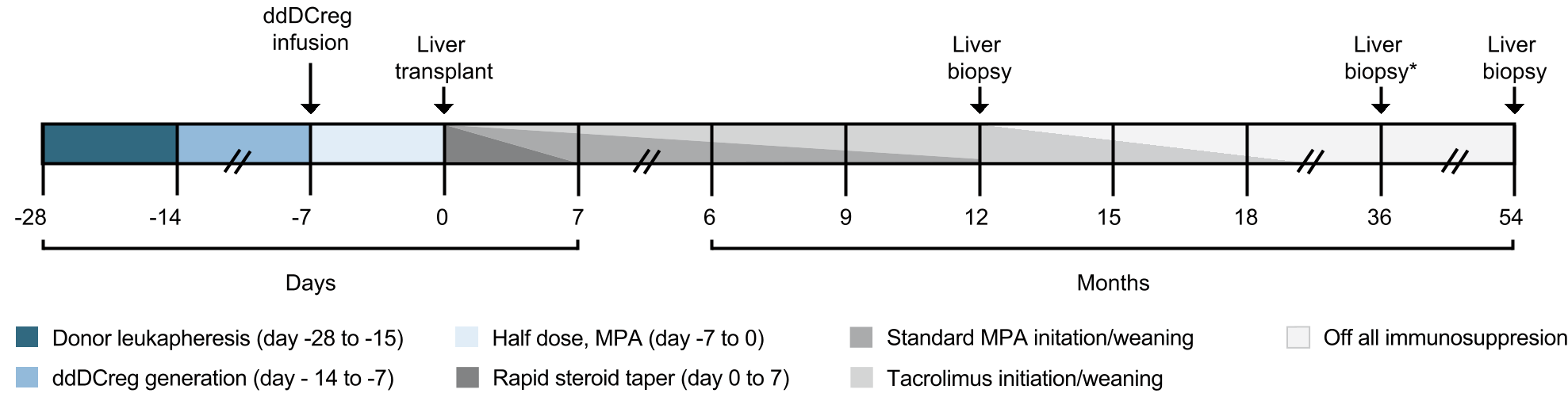 Figure 1: The treatment timeline, showing ddDCreg infusion at Day -7 and the structured 12-month weaning protocol.
Methodology: From Bench to Bedside
The trial enrolled 15 donor-recipient pairs. Donors underwent leukapheresis to collect monocytes, which were processed into DCregs. The recipients received a single infusion (target: 2.5–10 × 10^6 cells/kg) along with mycophenolate mofetil.
The protocol was rigorous:
- Safety First: Monitoring for infusion reactions and early rejection.
- Strict Eligibility: Only patients with "quiescent" (healthy) 12-month biopsies were allowed to start weaning.
- Staged Withdrawal: Mycophenolate was stopped at 12 months, followed by a slow tacrolimus taper.
Results: Triple the Success Rate
The findings are a significant leap for transplant immunology:
- Safety Profile: Zero infusion-related adverse events. Long-term graft function was comparable to (or better than) standard-of-care cohorts.
- Operational Tolerance: Among those eligible for weaning, 37.5% (3/8) remained completely drug-free for over 3 years. This is nearly triple the recognized historical benchmark of 13%.
- Immune Silencing: Lab tests showed a selective "silencing" of donor-specific responses. While the immune system could still fight third-party threats (like viruses), it remained indifferent to the donor liver.
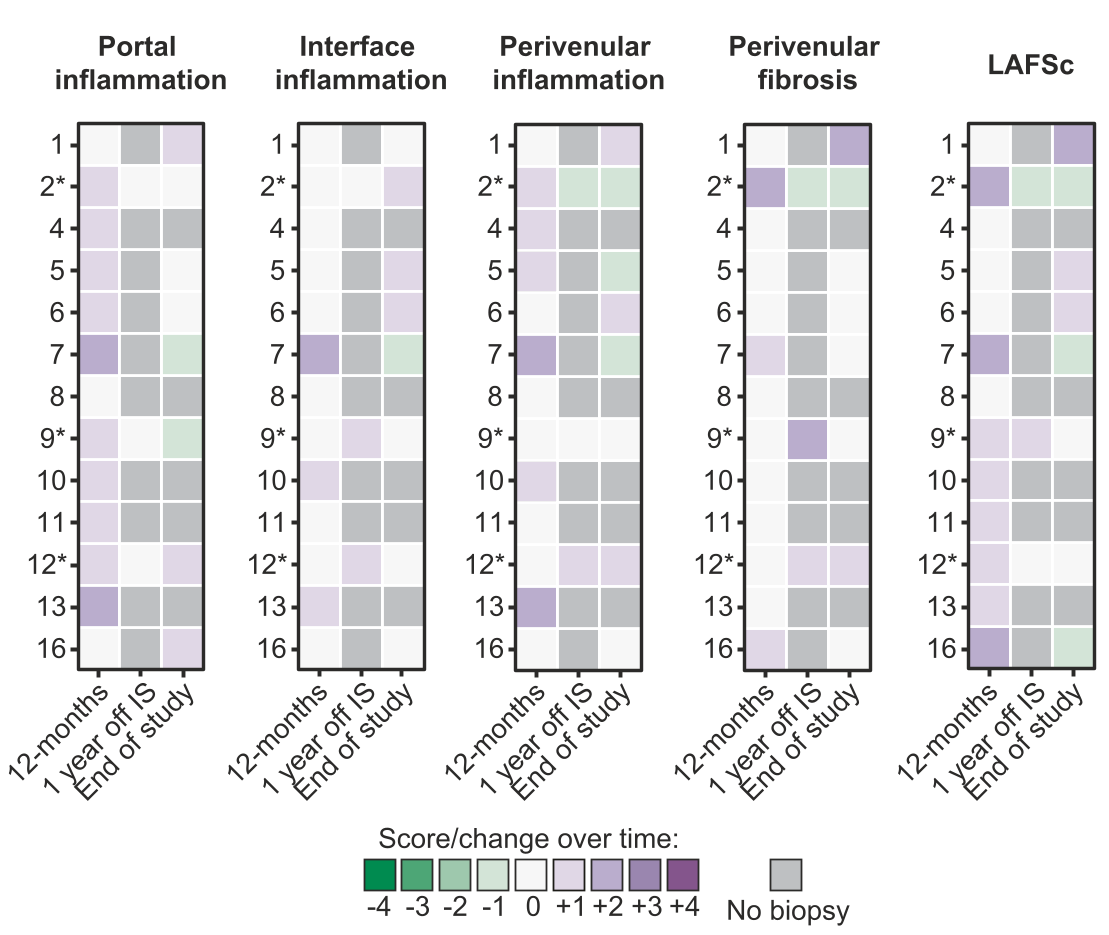 Figure 2: The "Swimmer Plot" (b) illustrates the journey of the 3 operationally tolerant patients who remained off all drugs until the end of the 5-year study.
Critical Insight: The "Quiet" Immune System
Perhaps the most compelling data comes from the plasma mediator analysis. The study found a sustained reduction in pro-inflammatory markers like IL-12p70 and GM-CSF. This suggests that the pre-transplant "hit" with DCregs fundamentally rewired the systemic inflammatory tone of the recipient, facilitating a "permissive" environment for the new graft.
Future Outlook and Limitations
While the results are groundbreaking, the authors provide several caveats:
- Sample Size: With only 13 final patients, a larger randomized controlled trial (RCT) is necessary to confirm efficacy.
- LDLT vs. DDLT: The study focused on Living-Donor Liver Transplantation (LDLT). Applying this to Deceased-Donor (DDLT) scenarios—where the "lead time" for a 7-day pre-infusion doesn't exist—will require creative timing or cell banking strategies.
Conclusion: This trial is a "proof-of-principle" that we can move beyond just managing rejection to actively inducing tolerance. For the thousands of transplant recipients facing a lifetime of drug side effects, ddDCreg therapy offers a glimpse of a drug-free future.